
Salt is a Permanent Pollutant in our Freshwater
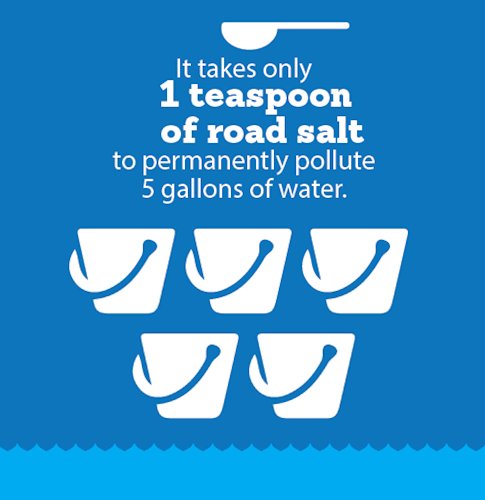
- All the salt that we apply ends up in our lakes, streams, and groundwater.
- Elevated salt concentrations in our waterways damage freshwater ecosystems.
- Salt prematurely ages infrastructure resulting in over $5 billion dollars in damage annually.
- Smart salting practices can reduce salt use by 30-70%.
-
Before a Snowfall: Snow is in the forecast tonight! SHOVEL or sweep early and often to clear as much snow as possible before spreading salt. The more snow you remove manually, the less salt you will need. #ShovelMoreSaltLess
-
If you need to salt: SCATTER salt so there is space between the grains. A 12-ounce coffee mug full of salt is enough to treat a 20-foot driveway or 10 sidewalk squares. #SaltSparingly
-
If below 15 degrees: SWITCH to use sand for traction at cold temps when salt and most deicers won’t work. (Warning: there is no truth-in-labeling for deicers; don’t trust their claims!) #ShovelScatterSwitch
-
After ice has melted: SWEEP up any excess salt so it doesn’t wash into storm drains and into our local waterways. #SweepTheSalt
-
When you can: STAY HOME during a winter storm event. This simple choice greatly minimizes risk to yourself and others and enables winter maintenance professionals to get their job done more easily. #StayHomeStaySafe #LeaveEarlyLeaveSpace
- Municipalities: Appleton, Bayside, Cudahy, De Pere, DeForest, Eau Claire, Linn, Menomonie, Middleton, Onalaska, Paddock Lake, Portage, Sheboygan, Shorewood Hills, Superior, Wausau.
- Campuses: UW-Eau Claire, UW-Green Bay, UW-Whitewater
- Businesses: American Family Insurance, CUNA Mutual
- Shannon Haydin, WI DNR: shannon.haydin@wisconsin.gov
- Hilary Dugan, UW-Madison: hdugan@wisc.edu
- Charlie Paradis, UW-Milwaukee: paradisc@uwm.edu